EHP microsporidian disease in shrimp: why shrimp grow slowly, vary in size and how to prevent it
Shrimp eating well but not growing, uneven in size, with white feces? The pond may have EHP. How to recognise, test for and prevent EHP from pond preparation.
In this article
The microsporidian EHP (Enterocytozoon hepatopenaei) parasitises the shrimp hepatopancreas and impairs nutrient absorption. The disease rarely causes mass mortality but makes shrimp grow slowly with severe size variation, raises the feed conversion ratio and lengthens the culture period, sharply reducing profit.
Signs of an EHP-infected pond
- Shrimp eat normally but gain weight slowly, and are still small after 60 days.
- Clear size variation: within the same pond there are large and stunted shrimp, differing by 2–3 times.
- Pale, small hepatopancreas; shrimp often have accompanying white feces disease.
- Feed conversion ratio (FCR) higher than normal.
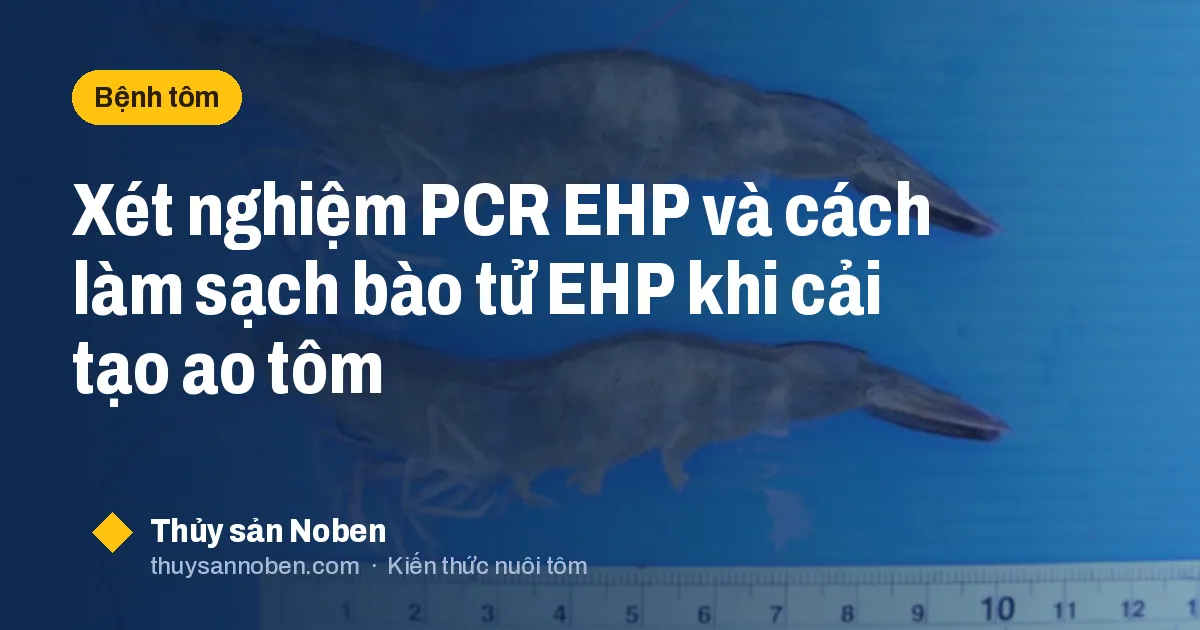
Only PCR testing can confirm that a pond is infected with EHP. Farmers should send shrimp (preferably hepatopancreas) and faeces samples to a laboratory when they suspect it.
Transmission routes
- Postlarvae infected at the hatchery: this is the most common route.
- Spores persisting in the pond bottom: EHP spores have a thick wall and can survive for a long time in bottom sludge between crops.
- Shrimp eating dead diseased shrimp or faeces from diseased shrimp in the pond.
How to prevent EHP
Thorough pond preparation
- Remove all bottom sludge; for lined ponds, scrub, wash and dry.
- Apply quicklime (CaO) at high rates on a moist bottom to raise bottom pH to 12 or higher for several days, greatly reducing spores. The dose depends on soil type; farmers should consult a technician. Chlorine alone is not sufficient to kill EHP spores.
- Dry the pond bottom thoroughly in the sun before taking in water.
Select clean postlarvae
Only stock postlarvae with a PCR-negative result for EHP from a reputable hatchery. It is advisable to retest a sample of the postlarvae before stocking.
During the culture cycle
- Remove dead and weak shrimp from the pond every day.
- Keep the bottom clean with probiotics, avoiding accumulation of faeces and uneaten feed.
- Support the hepatopancreas with liver tonic products such as HEPALIVER FS and digestive enzymes such as BIOZYME and PROZYME to help shrimp digest better.
- Add digestive enzymes and liver tonic products regularly to reduce the pressure of accompanying gut diseases.
When a pond is already infected with EHP
There is currently no specific treatment for EHP. Farmers should focus on keeping shrimp feeding well, the environment stable and feed optimised to reduce losses, and harvest when shrimp reach a profitable size. After the crop, prepare the pond very thoroughly to break the spore source for the next crop.
Frequently asked questions
Do EHP-infected shrimp die?
EHP rarely causes direct mortality, but it weakens shrimp, making them more prone to white feces disease, hepatopancreas disease and Vibrio, at which point scattered mortality can occur.
How can I tell whether slow growth is due to EHP or feed?
If shrimp eat steadily but still show wide size variation, a pale hepatopancreas and frequent white feces, EHP is highly likely. PCR testing is the most reliable way to be sure.
Does quicklime kill EHP spores?
Quicklime applied at the correct dose on a moist bottom raises bottom pH to 12 or higher and is a recommended measure for reducing EHP spores during pond preparation. Take safety precautions when handling it, as quicklime gives off strong heat.