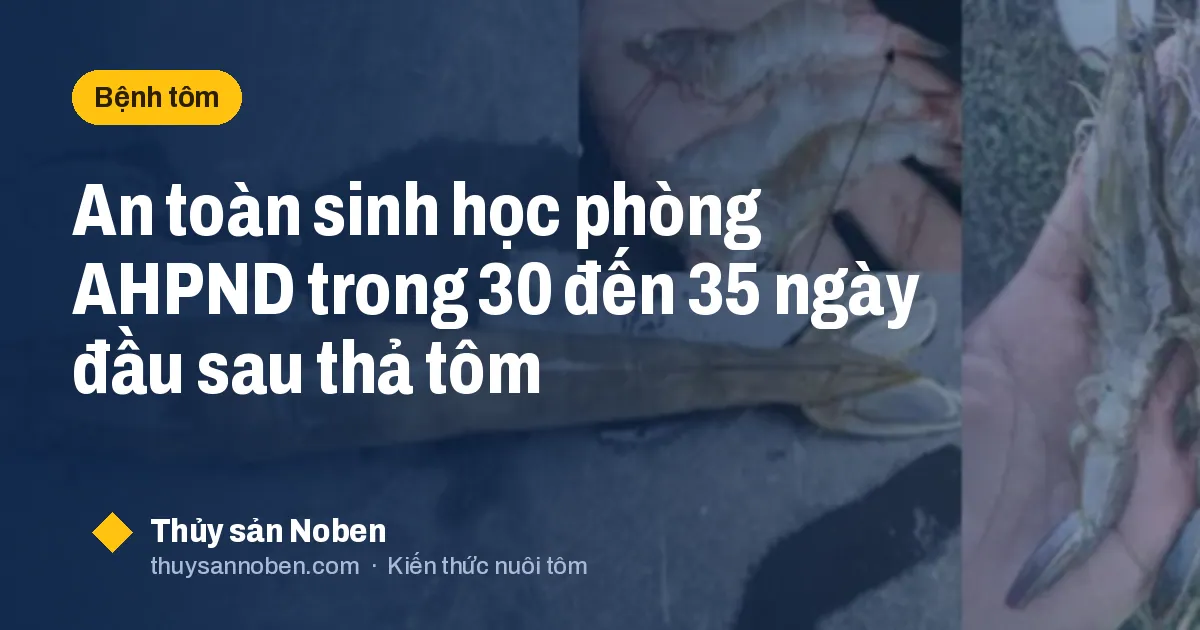
Biosecurity to prevent AHPND in the first 30–35 days after stocking shrimp
AHPND usually kills shrimp within 30–35 days of stocking. How to prepare water, choose and nurse postlarvae, feed and test for Vibrio to cut early deaths.
Technical guides from the Noben team, based on field work with Vietnamese shrimp farms and international references: disease recognition, water quality, minerals, lined ponds and farm economics.
AHPND usually kills shrimp within 30–35 days of stocking. How to prepare water, choose and nurse postlarvae, feed and test for Vibrio to cut early deaths.
Measure shrimp pond water at the right time and place, then read pH, alkalinity, DO, NH3, NO2, H2S and transparency against QCVN 02-19:2014 and keep a log.
Lined-pond whiteleg shrimp costs: feed, PL, power, chemicals, labour, depreciation. Research data, cost per kg from FCR and survival, break-even.
Low-salinity shrimp ponds often lack potassium and magnesium even with adequate alkalinity. How to calculate seawater-equivalent Ca, Mg, K and the Mg:Ca ratio.
The same ammonia level becomes many times more toxic as NH3 at high pH and temperature. Nitrification, an NH3-by-pH table and why NO2 is worse at low salinity.
Rainy season shrimp ponds risk pH shock, alkalinity and salinity drops, algae crashes and low bottom oxygen. How to manage ponds before, during and after heavy rain.
Shrimp farming in hot weather: water above 32°C lowers oxygen, algae bloom then crash, salinity rises. How to shade ponds, keep water deep, aerate and adjust feeding.
White faecal strings floating in the pond may come from Vibrio, EHP, gregarines or sloughed hepatopancreatic microvilli. How to examine and test samples to find the cause.
Lab-lab, benthic and slimy algae grow when shrimp pond water is too clear. Causes, toxic gas from dying mats, prevention by colouring water, safe treatment.
Which samples to send for accurate EHP PCR testing, why microscopy easily misses it, and how to use quicklime (CaO) and bottom drying to cut EHP spores before a new crop.
A shrunken, pale, white or swollen waterlogged hepatopancreas makes shrimp eat poorly, grow slowly and die sporadically. How to check it, common causes and liver support steps.
Mineral guide for whiteleg and black tiger shrimp: macro and trace minerals, Ca, Mg, K ratios, night-time application, doses by stage and common mistakes.
Lined ponds control the bottom and disease better than earthen ponds. Tips on pond design, stocking density, siphoning, liner slime, minerals and oxygen.
pH and alkalinity govern moulting, shell hardening and gut health. Ranges for whiteleg shrimp, raising alkalinity, lowering pH and fixing post-rain swings.
Toxic NH3, NO2 and H2S silently harm shrimp. Safe thresholds, warning signs and treatment with probiotics, yucca and zeolite for earthen and lined ponds.
Shrimp eating well but not growing, uneven in size, with white feces? The pond may have EHP. How to recognise, test for and prevent EHP from pond preparation.
WSSV white spot can kill a whole pond within 3–10 days. How to spot white spots on the shell, when outbreaks occur and a biosecurity prevention routine.
Shrimp dying 10–35 days after stocking with a pale, atrophied hepatopancreas? Learn the signs of EMS/AHPND and an effective prevention routine for ponds.
Whiteleg shrimp passing white faeces, faeces floating on the pond, discontinuous gut? A guide to early detection, causes (bacteria, parasites, EHP) and treatment steps.
Distributors, importers and brand owners: tell us what you need and we will reply with prices, specifications and documents within one working day.
+84 934 246 420WhatsApp / Zalo on the same number, or email thuocthuysannoben@gmail.com