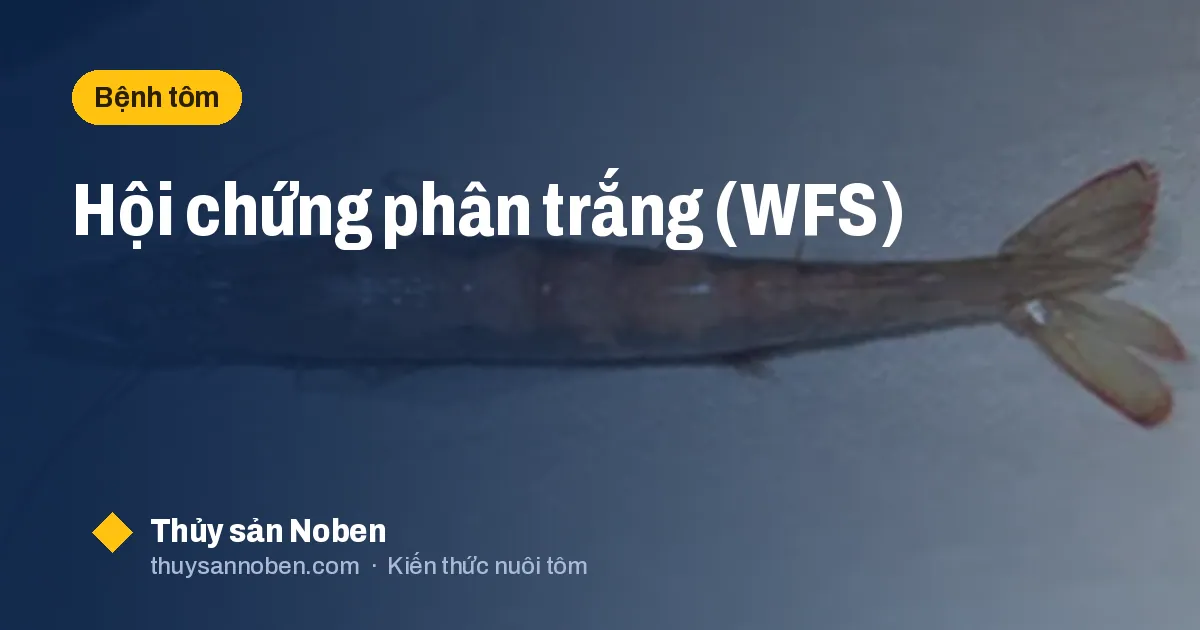
White feces disease in whiteleg shrimp: causes, signs and effective treatment
Whiteleg shrimp passing white faeces, faeces floating on the pond, discontinuous gut? A guide to early detection, causes (bacteria, parasites, EHP) and treatment steps.

In this article
White feces disease is one of the most damaging diseases for whiteleg shrimp farmers today. It usually appears between day 30 and day 70 of culture, causing shrimp to eat less, grow slowly and suffer prolonged losses, and if not treated early it can wipe out an entire crop. This article helps farmers recognise the disease from the very first signs, understand its causes correctly and treat it step by step.
Signs that shrimp have white feces
Farmers should check the feeding trays and the water surface every day, because the earlier the disease is detected, the lighter the treatment needs to be:
- White faeces floating on the pond surface, gathering in clumps in pond corners, at the downwind end or near the aerators.
- Opaque white or pale yellow faecal strings in the feeding trays, soft and easily broken.
- Discontinuous gut, loose gut contents or empty gut, with a pale gut colour instead of the dark brown of the feed.
- Pale, shrunken or swollen hepatopancreas, which feels mushy when gently squeezed.
- Clearly reduced feeding, with more feed left in the trays than usual and lethargic shrimp drifting to the pond edges.
When two or more of these signs appear, farmers should immediately cut feed by 30–50% and start treatment, without waiting until faeces are floating across the whole pond.
When does white feces disease usually appear?
The disease occurs in both whiteleg shrimp and black tiger shrimp, most often at 30–70 days of culture (sometimes up to day 90) and during abnormal weather: prolonged heat, heavy rain or seasonal transition. In northern Vietnam the disease is usually concentrated from April to July, and in the south from August to October, when water temperatures are high and ponds are stocked at high density. During these periods farmers should step up daily checks of feeding trays and shrimp guts.
Causes of white feces disease
White feces is a syndrome caused by several factors acting together, so addressing only one factor usually does not eliminate the disease.
Vibrio bacteria
Vibrio species multiply rapidly when the pond bottom is dirty, there is a lot of uneaten feed and the water temperature is high. They attack the gut and hepatopancreas, causing poor digestion and white faeces.
Intestinal parasites (gregarines)
The parasites attach inside the gut and hepatopancreas, compete for nutrients and damage the gut lining. This is a common cause in ponds with many snails, mussels or polychaete worms, or where fresh live feed is used.
EHP microsporidian
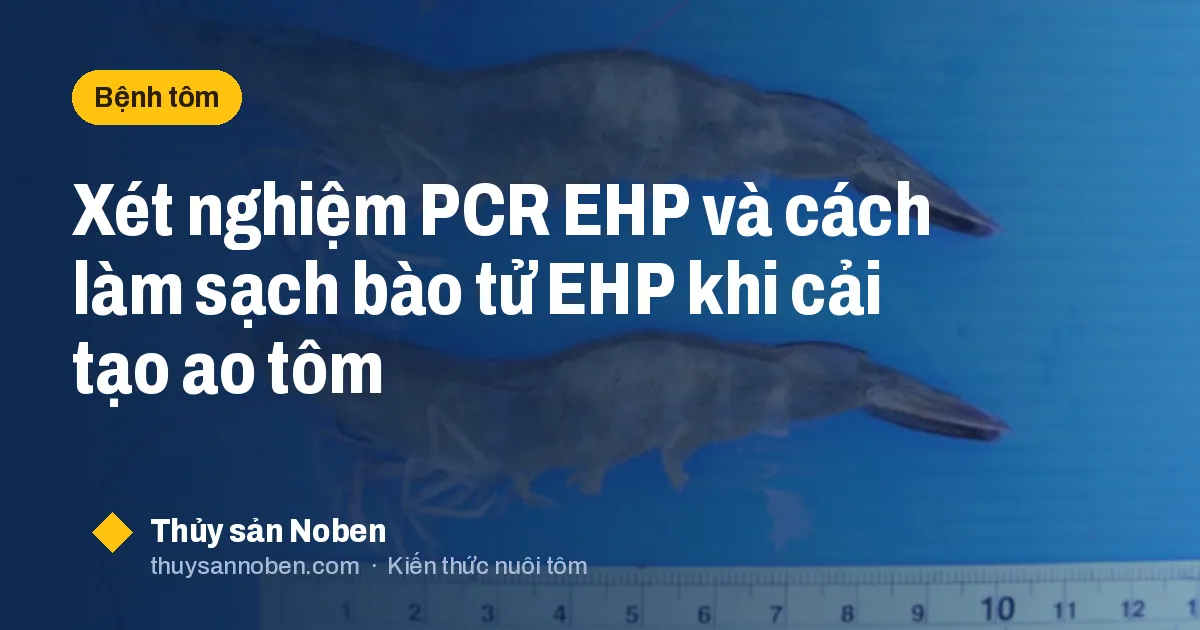
EHP (Enterocytozoon hepatopenaei) impairs hepatopancreas function, causing slow growth and size variation, and shrimp are very prone to developing white feces as well. See also the article EHP microsporidian disease in shrimp.
Environment and feed management
Overfeeding, poor-quality or mouldy feed, high toxic ammonia (NH₃) and nitrite (NO₂), algae crashes and sudden temperature changes after rain all weaken the shrimp gut, creating conditions for pathogens to break out.
What to do when a pond has white feces
Farmers should treat in this order: reduce feed, clean up the pond environment, and only then mix treatment products into the feed.
- Reduce feed by 30–50%, increase aeration to keep dissolved oxygen ≥ 5 mg/L, check pH, alkalinity and toxic gases, and skim off floating white faeces from the pond surface every day.
- Treat the pond bottom and water: if Vibrio counts in the water are high, disinfect the water first and wait 2–3 days before reseeding probiotics (never apply disinfectant and probiotics on the same day). Use a bottom-treatment probiotic such as AQUA BAC to break down waste and reduce toxic gases; in lined ponds, combine this with siphoning.
- Control intestinal parasites if gregarines are seen under the microscope or the pond has a history of parasites: send shrimp samples to a technician or veterinary officer for a suitable treatment protocol.
- Support the gut and hepatopancreas: mix a product that supports white feces treatment, such as MEGA CID or DAVI CID LIQUID, into the feed, combined with the liver tonic SORBEST to support liver detoxification.
- Restore the gut microbiota after the treatment course with a feed-mixed probiotic such as AQUALAC FS, helping the gut fill out and faeces become long again.
Do not use antibiotics for prevention. Only use antibiotics once a bacterial cause has been confirmed (with an antibiogram), as prescribed by a veterinary officer, using only permitted types (never banned substances), at the correct dose, and stop treatment before harvest according to the withdrawal period stated on the label.
Preventing white feces from the start of the crop
- Prepare the pond thoroughly and eliminate snails, mussels and intermediate crustacean hosts that carry parasites before stocking.
- Choose disease-free postlarvae that have tested PCR-negative for EHP.
- Feed according to the feeding trays and do not overfeed; store feed in a dry place.
- Add digestive enzymes to the feed daily; check for intestinal parasites under the microscope every 7–10 days during the period from day 20 to day 60, and deworm only when they are found, following technical guidance.
- Apply bottom-treatment probiotics regularly and keep toxic gases within safe limits.
Treating wastewater when a pond is diseased
Wastewater from a diseased pond should be pumped into a holding pond, treated with chlorine at about 30 ppm and held for at least 4 days (until no residual chlorine remains) before discharge, to avoid spreading the disease to other ponds and to neighbouring farms. Dead shrimp must be removed from the pond immediately so that healthy shrimp do not eat diseased ones.
Frequently asked questions
Are shrimp with white feces safe to eat?
Shrimp with white feces do not transmit the disease to humans. However, diseased shrimp usually grow slowly and suffer losses, so farmers need to treat early to protect yields and avoid harvesting undersized shrimp.
How long does it take to recover from white feces disease?
If detected early and the right cause is treated, shrimp usually resume feeding after 3–5 days and faeces return to normal after about 7 days. Severely affected ponds, or those with EHP or extensive hepatopancreatic damage, take longer.
Should I exchange water when shrimp have white feces?
You can exchange 10–20% of the water if the incoming water has been properly treated. Do not exchange large volumes, as this can easily stress the shrimp and make the disease worse.
What is the difference between white faeces and loose faeces?
Loose faeces are usually due to feed or the environment, and shrimp still eat fairly well. White faeces accompanied by a pale hepatopancreas, discontinuous gut and reduced feeding are signs of disease that need immediate treatment.